High-resolution GIS modeling shows where legal dock extensions and the minimum barge maneuvering footprint intersect — and where they collide. Scroll each diagram to view full detail.
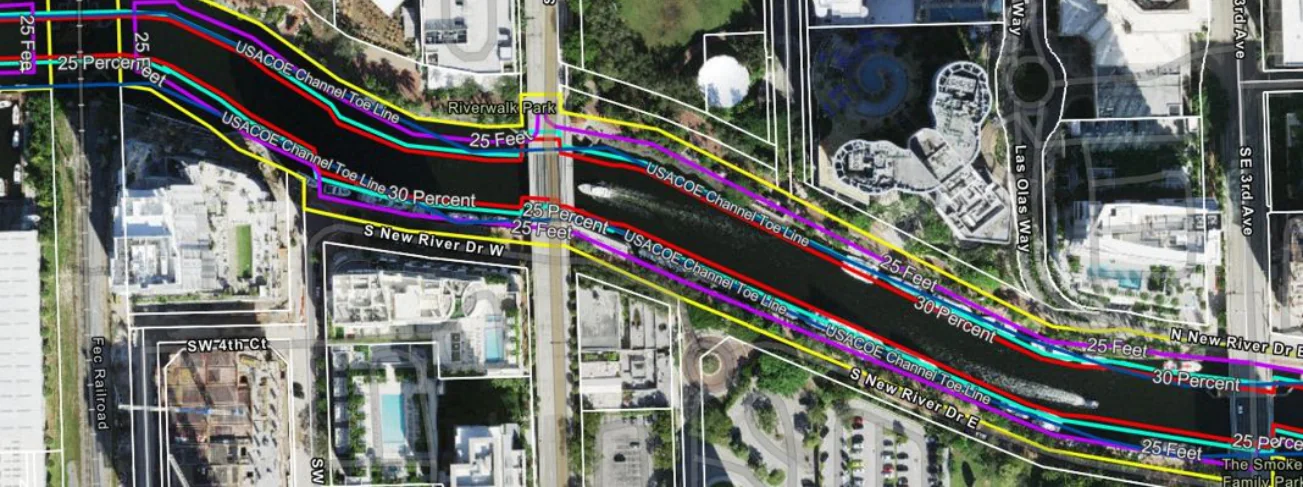
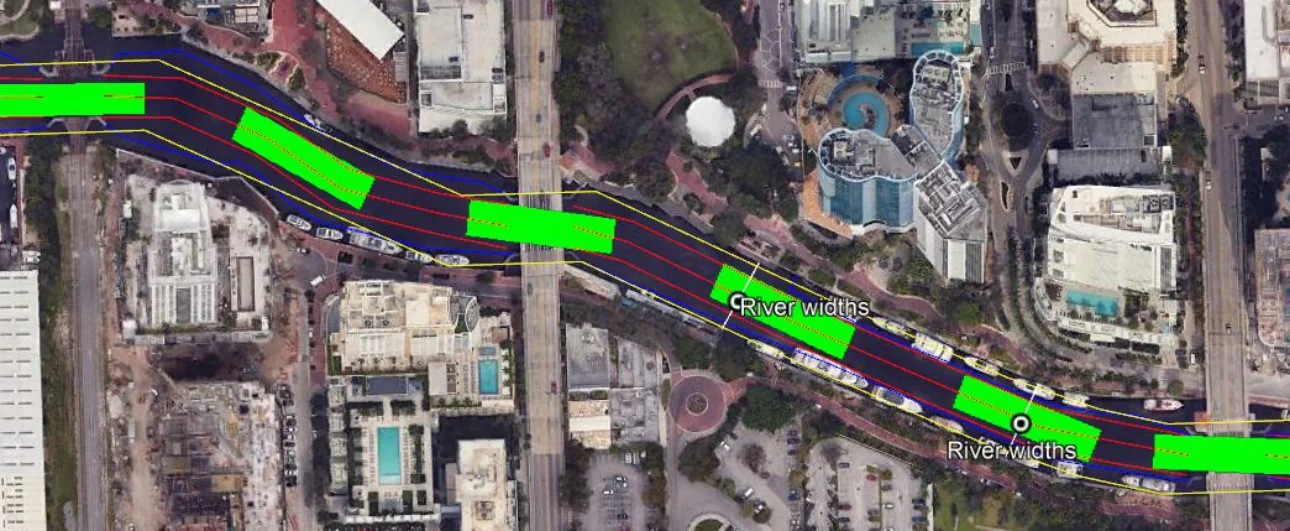
The Andrews Ave bridge crossing is one of the most constrained sections of the navigation corridor. Bridge fenders, property line offsets on both banks, and accumulated vessel storage compress the functional river width. When dock extensions from both banks approach the 30% maximum, the remaining channel is insufficient for a utility barge transit.
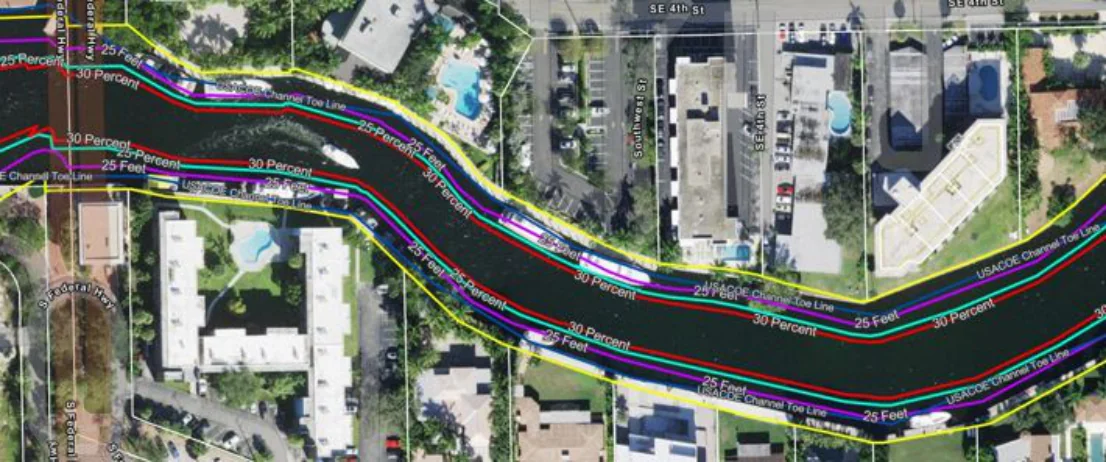
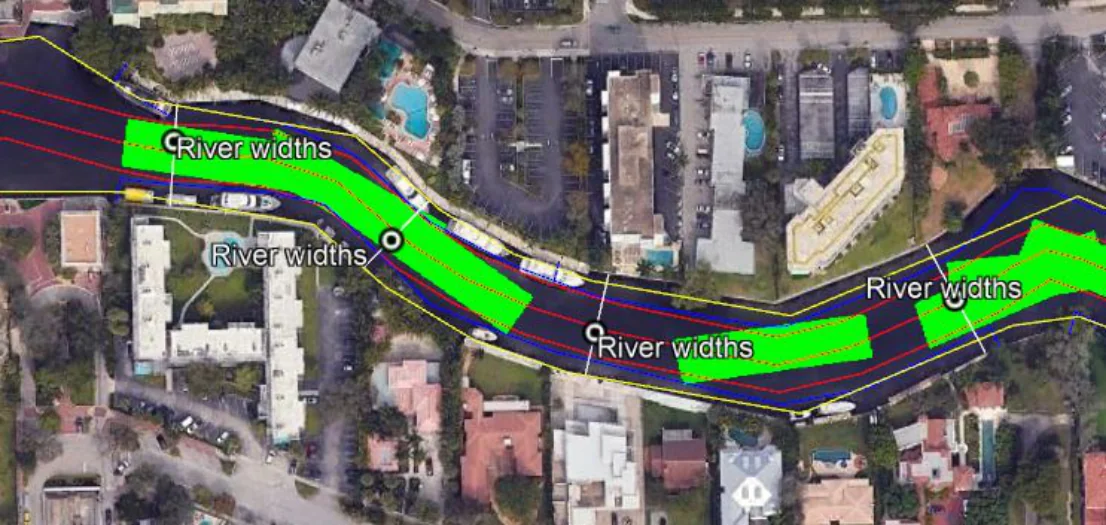
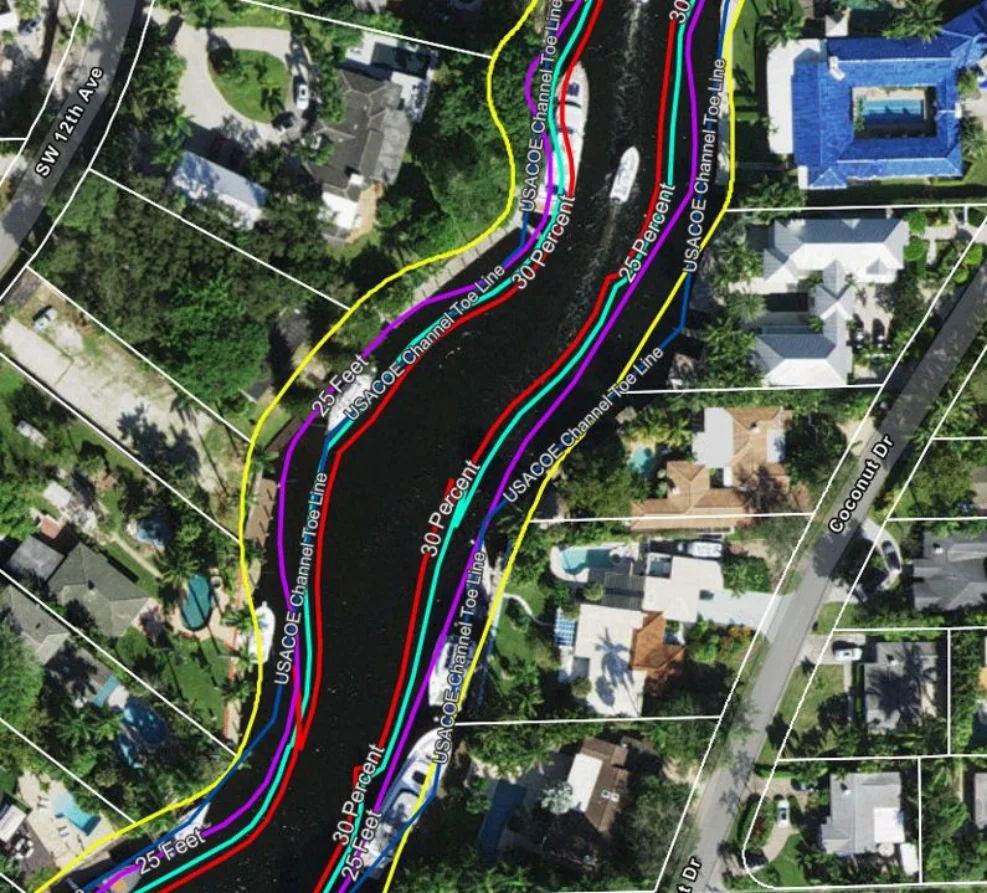
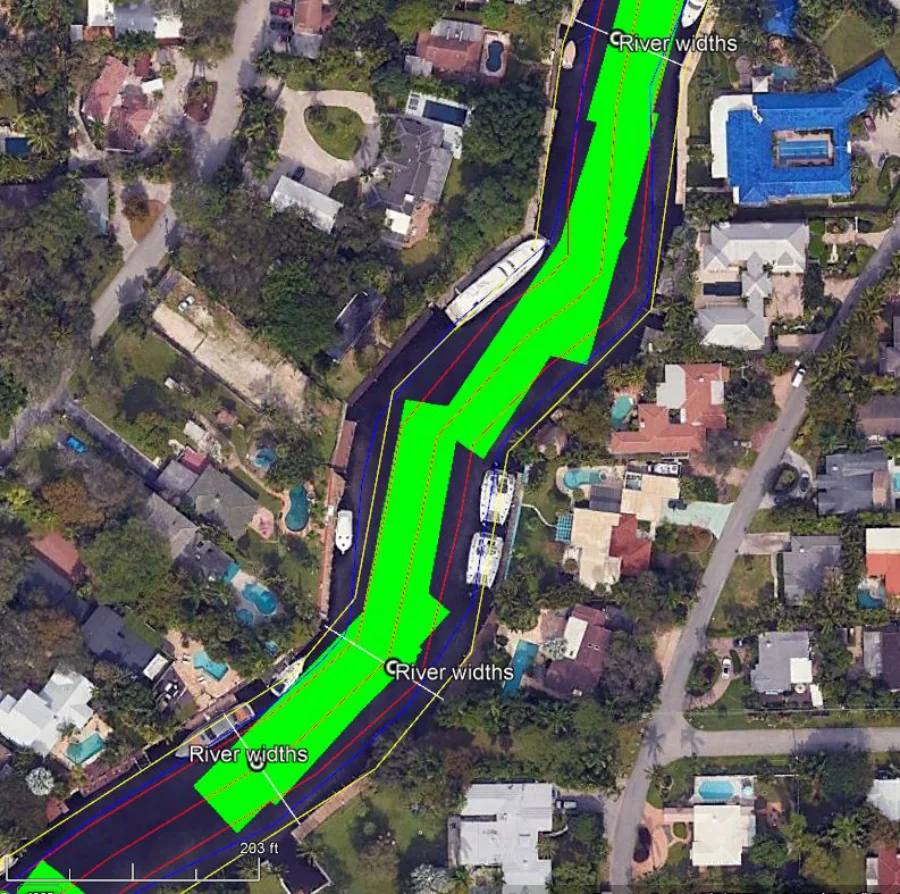
Just east of the Federal Highway (US-1) tunnel, vessel traffic converges from the downtown basin and the ICW approach. The barge simulation shows that the combined tow package occupies virtually the entire functional channel width. Any dock or vessel encroachment in this segment threatens the safety of vessels transitioning through this high-traffic section.
"Little Florida" is a pronounced bend in the river with restricted sightlines and sharp curvature. Navigating a rigid tow through a bend requires a wider swept path than in a straightaway — the barge cannot simply turn within its own length. Dock extensions that appear acceptable in isolation become critical obstructions when the vessel must swing through the bend.
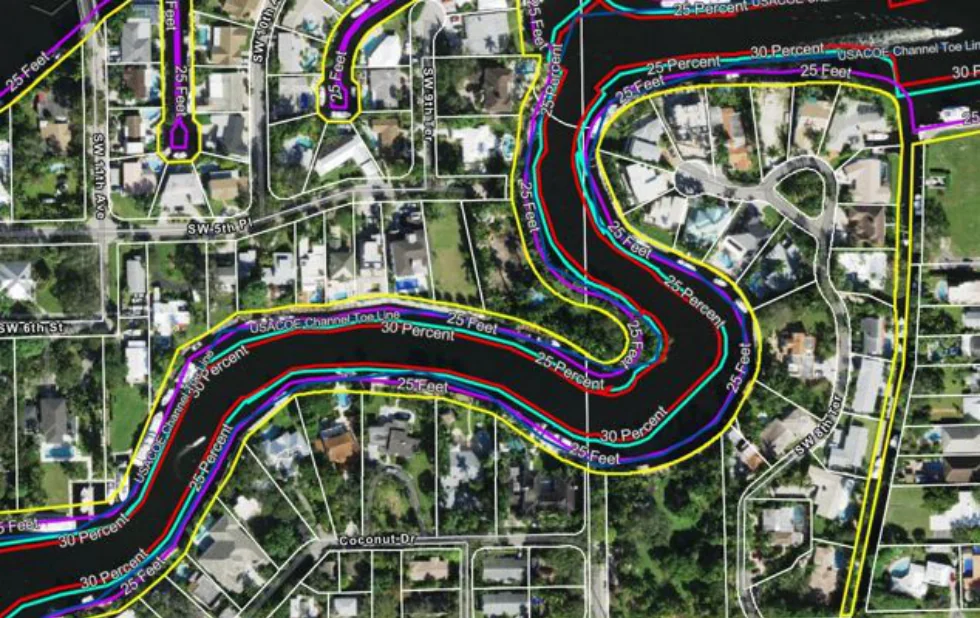
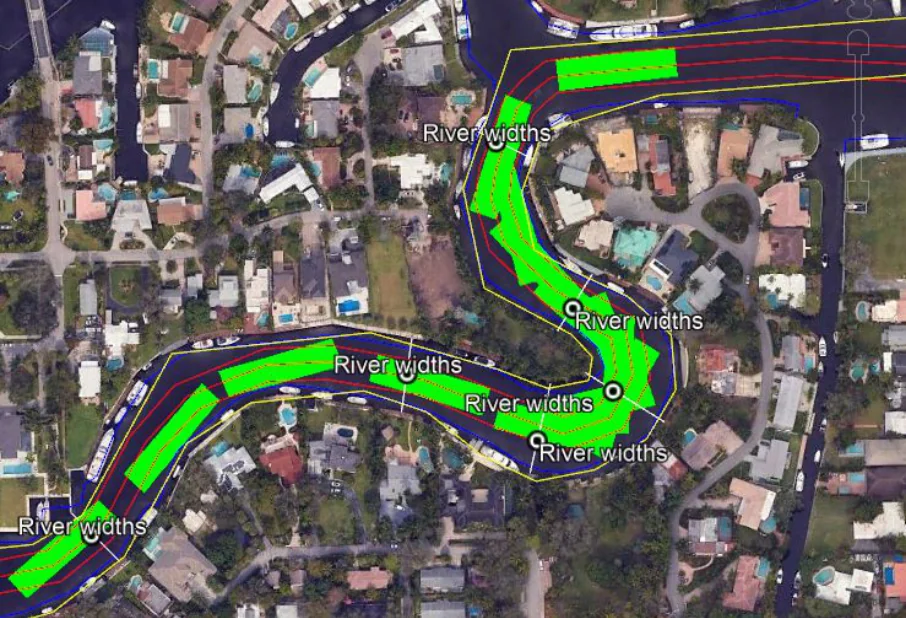
"The Wiggles" is the most technically demanding segment of the New River — a series of successive sharp bends that require constant tow adjustments and clear sightlines ahead. The barge footprint simulation demonstrates that even in the current state of the channel, the tow package fits with minimal margin. Any additional dock or vessel encroachment renders this transit geometrically impossible.
These maps are not hypothetical. They represent existing legal dock extension limits applied to the current channel geometry. The solution is to formally designate Special Navigation Sections with defined minimum channel widths — aligning code with physics before an incident forces that decision under pressure.