The FP&L Dania Power Plant
Florida Power & Light requires periodic barge access to service the Dania Beach Power Plant. This is not optional. It is operational necessity for regional power infrastructure.
Why This Cannot Wait
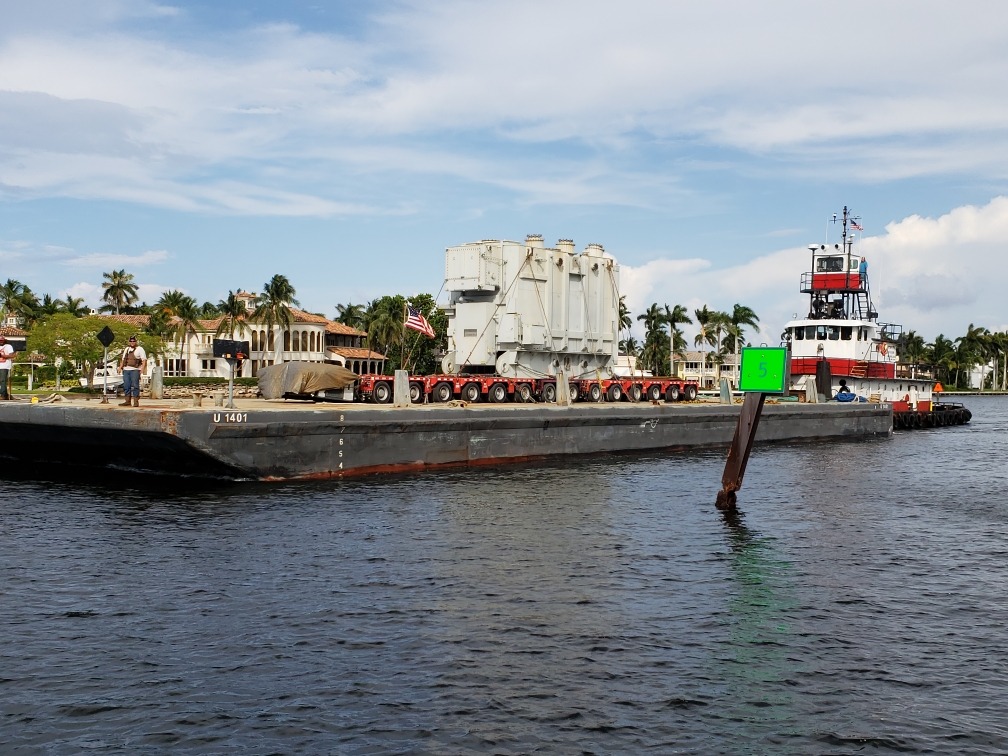
Florida Power & Light periodically requires a barge of approximately 150 feet in length and 50 feet in beam to transit the New River to service the Dania Beach Power Plant. This barge requires a clear, unobstructed maneuvering channel to navigate the bends and narrow sections of the river.
Uncontrolled dock extension and vessel storage — each individually compliant with local code — will eventually make this transit geometrically infeasible. This is not a hypothetical risk. It is an arithmetic certainty if the current trajectory continues.
When barge access to the power plant is denied or compromised, it is not a navigation inconvenience. It is a regional power infrastructure failure.
A senior Florida Power & Light executive must formally brief the City Commission on required barge dimensions, operational frequency, and minimum maneuvering width. This elevates the issue from a boating complaint to critical infrastructure continuity. The Commissioner's office must initiate this contact.
The Boating Capital of the World
Fort Lauderdale's marine industry is built on the New River. The river is not a scenic amenity. It is the artery of a multi-billion dollar supply chain.
Yacht Deliveries & Refits
100 to 200-foot yachts regularly transit the New River under tow to reach boatyards for refit, maintenance, and delivery. Safe maneuvering room in critical bends is not a luxury — it is the operational requirement of a billion-dollar industry segment.
Seawall Repair Barges
Climate resilience mandates and flooding regulations require widespread seawall repairs and upgrades to a minimum of 5.0 ft NAVD88 elevation throughout the river corridor. Each repair requires work barge access. If the channel is compromised, mandated infrastructure repairs become logistically impossible.
NAVD88 Seawall Standard; SFWMD Resilience RequirementsEmergency Response Access
Emergency response vessels require clear maneuvering room to respond to fires, medical emergencies, and vessel groundings in the river corridor. Cumulative channel compression is not just an economic problem. It is a public safety and response time issue.
Residential Properties as Commercial Operations
On both sides of the river, residential properties are being used for vessel aggregation and storage in patterns consistent with commercial marina operations, but without commercial zoning classification or permits.
The Zoning Conflict
Residential waterfront properties on both sides of the river are accumulating vessels for storage and commercial operations under residential zoning designations. This creates a competitive imbalance against properly permitted marine facilities and compounds channel compression through increased vessel density.
The Correct Response
This is a zoning enforcement matter, not a maritime argument. Properties operating as de facto commercial facilities under residential zoning classifications must be reviewed by City code enforcement. The solution is structural and policy-based, not personal. The focus must remain on cumulative density and channel function.
"If work barges cannot access seawalls for mandated repairs, resilience planning stalls. The New River is not lifestyle boating. It is industrial access."