Federally Navigable Waterway

The New River Is Not a Backdrop.
It Is a Supply Chain.

The New River in Fort Lauderdale is a working waterway supporting critical infrastructure, a multi-billion dollar marine industry, and public safety. Cumulative dock and vessel encroachment is narrowing the functional channel. We must act before geometry makes the decision for us.
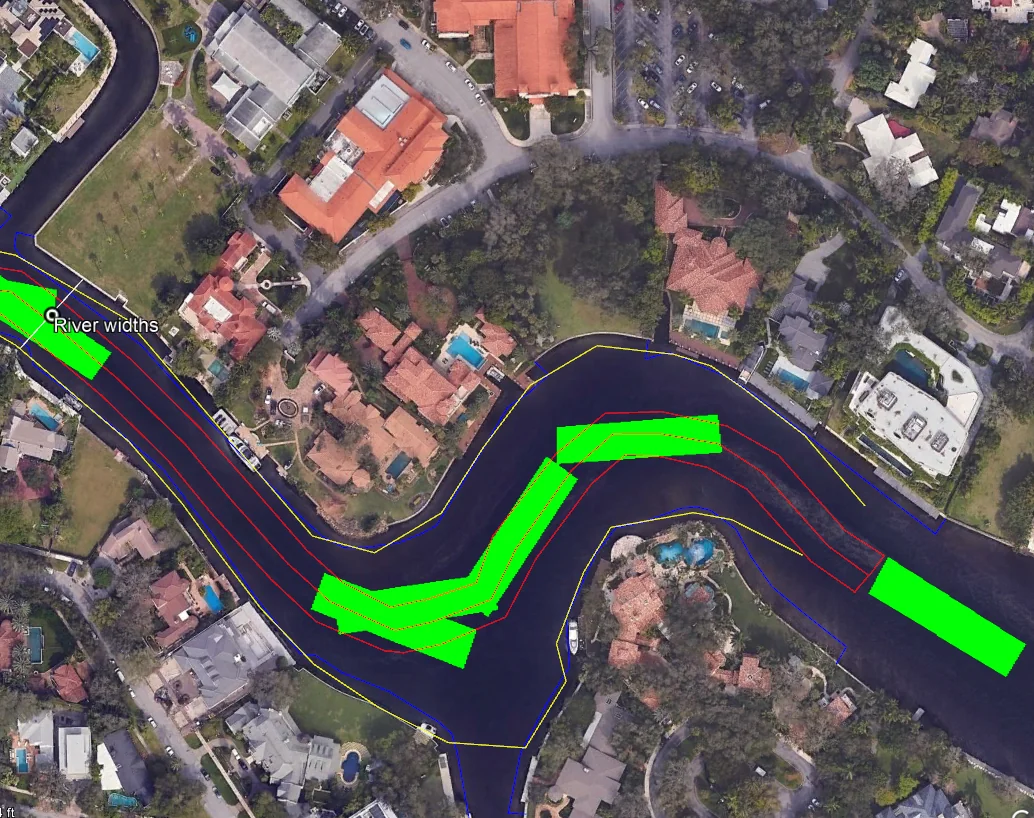
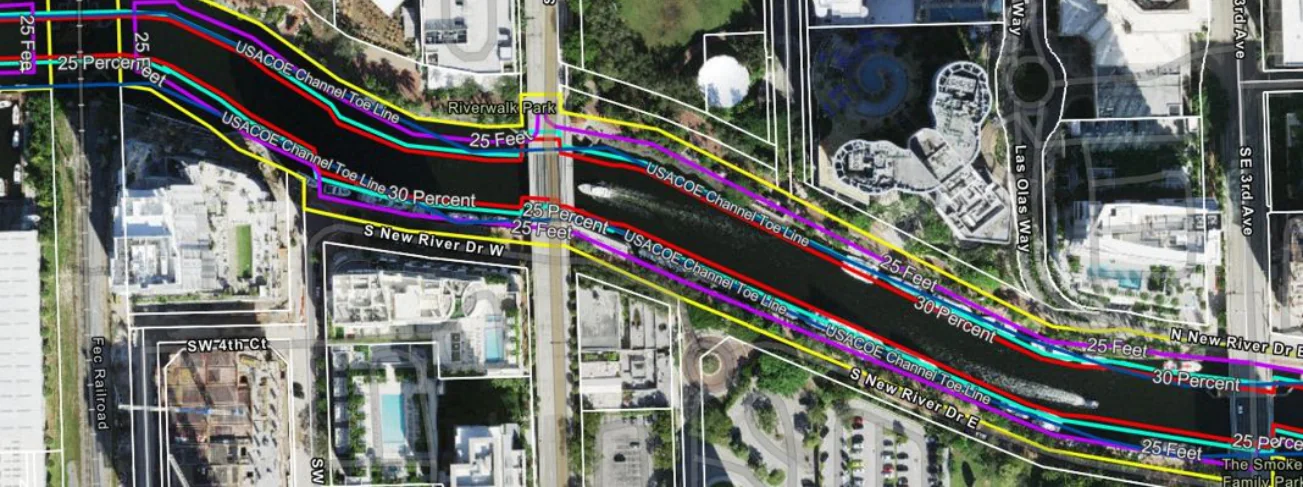
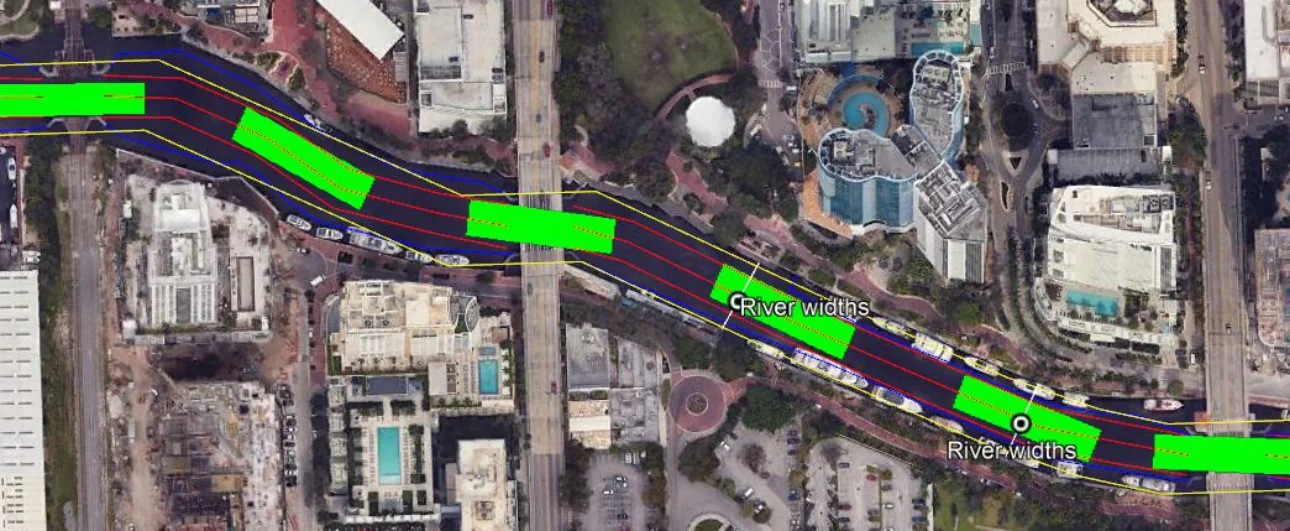
Aerial GIS overlay of The Wiggles on the New River — showing barge maneuvering footprint (green), USACOE channel boundary (yellow), and minimum 60-foot corridor (red)
🔎 GIS Navigation Corridor Analysis — The Wiggles
The Regulatory Disconnect

Two Systems. One River. One Problem.

Local dock code is based on property line geometry. Safe navigation is based on maneuvering geometry. These are not the same. When both sides of the river build to the maximum allowed, the channel technically complies on paper but functionally becomes unsafe.

Property Line Compliance

City code permits dock extensions of 30% from the property line citywide, and 33% in annexed areas. Individual parcels can be fully compliant while collectively collapsing the navigable channel width.

ULDR 47-19.6.E; ULDR 47-39.A.1.b

Cumulative Impact

GIS modeling of the New River corridor demonstrates that when property line extensions from both banks are combined, the maneuvering width is compressed well below what is required for safe large vessel and barge transit.

MAB New River GIS Modeling; USACOE Channel Toe Line

Enforcement Gap

City Police authority stops at the Fort Lauderdale/Town of Davie boundary. Vessels on the south bank may be locally compliant but jointly create a navigational hazard. State law provides the enforcement tool. The City must define the corridor first.

§327.44 F.S.; §327.70 F.S.; 14 U.S.C. §522

"Parcels may be legally compliant but geometrically unsafe. One dock does not cause the issue. Cumulative geometry does."

Captain Robert Franks — New River Navigation Corridor Review
Regulatory Framework

Who Governs the New River?

The New River operates under a layered, multi-agency regulatory framework. Understanding this structure is essential to any enforcement or policy solution.

Zone / Authority Jurisdiction Legal Basis
ICW to Marker 12 (Tarpon Bend) Federal — USCG holds primary authority for bridge operations and safe navigation 33 U.S.C. §403, §409
Upstream of Marker 12 City of Fort Lauderdale, Broward County, State of Florida, SFWMD, and LIWMD (annexed areas) ULDR 47-19.6.E; ULDR 47-39
Bridge Operations USCG regulates all bridge operations throughout the river 33 U.S.C. §403
Waterway Enforcement City Police, City Code, and FWC enforce local and state waterway/boating regulations §327.44 F.S.; §327.70 F.S.
South Bank (Town of Davie) Town of Davie controls zoning and enforcement. City authority does not cross jurisdictional boundary §327.60 F.S.; Interlocal coordination needed
The Action Plan

Three Actions. One Functional River.

These three steps, taken now, prevent this from becoming a courtroom correction under pressure.

01

Invite FP&L to Formally Brief the Commission

Request a senior Florida Power & Light executive to confirm barge dimensions, operational frequency, and the minimum maneuvering width required to service the Dania Power Plant. This reframes the entire conversation from a boating complaint to a critical infrastructure continuity issue.

02

Designate Special Navigation Sections

Direct City staff to identify critical segments of the New River and establish minimum functional channel widths based on vessel class and infrastructure needs. Revise dock code so it reflects navigational geometry, not property line geometry.

03

Form an Intergovernmental Coordination Task Force

Convene a joint coordination group including the City of Fort Lauderdale, the Town of Davie, the FWC, and the USCG. Align enforcement authority and navigation standards before an incident forces reactive intervention. Consider initiating a formal USCG WAMS review.